
TPO Roofing: Everything You Need To Know
TPO (Thermoplastic Polyolefin) roofing is one of the most popular solutions for flat and low-slope commercial roofs. Whether you’re a business owner, property manager, or contractor, understanding TPO roofing—from installation to repair—can help you make informed decisions for your property. In this ultimate guide, we’ll explore every aspect, including costs, benefits, common repairs, and how TPO compares to other roofing systems.
What Is TPO?
TPO is a single-ply roofing membrane made from a blend of rubber and reinforcing fillers. It’s designed for commercial and industrial buildings and is known for its strength, flexibility, and energy efficiency. The bright, reflective surface repels UV rays, helping to keep buildings cooler and reduce energy costs.
TPO Roofing Installation
Installing TPO roofing is a meticulous process that requires professional skills for the best results. Here are the main steps:
- Preparation: Clean and inspect the roof deck to ensure it is dry and free of debris and damage.
- Insulation Installation: Lay down an insulating board (like polyisocyanurate or EPS) to improve energy efficiency.
- Membrane Application: Roll out the TPO membrane over the prepared surface, letting it relax to prevent wrinkles.
- Attachment: Secure the membrane using mechanical fasteners, adhesives, or ballast according to project needs.
- Seam Welding: Use hot-air welding tools to bond seams together for a watertight finish.
- Edge and Flashing Work: Install flashing and seal around protrusions or roof edges.
Watch:
This video is property of RoofRepair101
NEW TPO ROOF! Full Flat Roofing Installation
TPO Roofing Costs
TPO roofing is one of the most cost-effective commercial options. The price depends on thickness, labor, and your roof’s size or complexity.
Average Costs:
Material & Installation: $4–$10 per square foot
Typical Total Range: $7,700–$14,000 for a standard commercial roof install
Material Only: $1–$2.50 per square foot
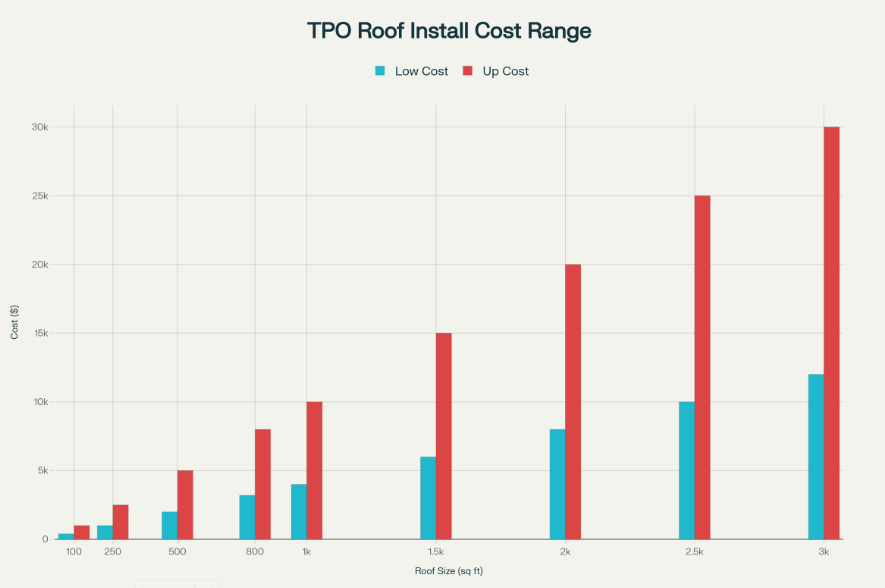
Cost Table:
| Roof Size (sq ft) | Cost Range ($) |
|---|---|
| 100 | $400 – $1,000 |
| 500 | $2,000 – $5,000 |
| 1,000 | $4,000 – $10,000 |
| 1,500 | $6,000 – $15,000 |
| 2,000 | $8,000 – $20,000 |
| 3,000 | $12,000 – $30,000 |
See the cost breakdown below:
Cost Range for TPO Roofing Installation by Roof Size
Tip: Adding insulation can increase upfront costs but lead to significant long-term savings. For more insights, visit the Nick Tracey Roofing cost guide.
Advantages of TPO Roofing
Energy Efficiency: Reflects UV rays, keeping buildings cooler and reducing energy bills by up to 40%.
Durability: Resistant to mold, punctures, and dirt accumulation. With proper maintenance, can last 20–30 years.
Easy Installation: Comes in large rolls, installed via heat welding for strong, seamless coverage.
Variety of Colors: Usually white, but available in shades like tan and bronze to match different designs.
Eco-Friendly: TPO membranes can be recycled at the end of their lifespan.
How TPO Roofing Saves Money
Lower Cooling Costs: UV-reflective surface reduces heat absorption and air conditioning use.
Minimal Maintenance: Durable, watertight seams lower the risk of leaks or water-related damage.
Affordable Repairs: Isolated repairs don’t require extensive work—patch and weld options keep costs down.
Increased Building Value: Modern, energy-efficient roofs enhance property appeal for potential buyers or tenants.
How Is a TPO Roof Repaired?
Repairing TPO roofs is straightforward but should be done by professionals to preserve warranties and performance.
Repair Steps:
Inspection: Identify the extent and cause of damage or leaks.
Cleaning: Remove debris and contaminants around the damaged area.
Patching: Cut a TPO patch to cover small punctures or tears.
Hot-Air Welding: Secure the patch with a hot-air welding tool to ensure watertight bonding.
Inspection: Double-check for gaps or missed spots; test the repair to guarantee performance.
Watch:
Repair Options if Your TPO Roof Has Less Than 25% Saturation
If an inspection shows less than 25% of your TPO roof is saturated (wet or damaged), spot repairs are often all you need:
Re-Welding Seams: For separated seams, reheat and re-press to recreate a waterproof seal.
Small Area Patching: Isolate and patch only damaged areas, avoiding a full replacement.
Regular Monitoring: After repair, schedule yearly inspections to prolong roof life.
For more information on commercial roof maintenance, explore our [roof repair resources at Nick Tracey Roofing].
Next Steps: How Does TPO Compare With Other Commercial Roofing Systems?
TPO stands out, but let’s compare it with some main market alternatives:
| Feature | TPO Roofing | EPDM Roofing | Built-Up Roofing (BUR) | PVC Roofing |
|---|---|---|---|---|
| Lifespan | 20–30 yrs | 20–30 yrs | 20–30+ yrs | 20–30 yrs |
| Energy Efficiency | High (UV reflecting) | Moderate (absorbs heat) | Moderate | High (UV reflecting) |
| Installation | Heat welded seams | Glued or taped seams | Multi-layer, labor intense | Heat welded seams |
| Leaks/Repairs | Easy to patch | Easy to patch | Difficult, may spread | Easy to patch |
| Cost | $, low-moderate | $, low | $$, moderate-high | $$, moderate-high |
| Foot Traffic Resistance | Moderate | High | High | Moderate |
TPO vs EPDM: TPO is more energy efficient and easier to weld; EPDM is more hail-resistant.
TPO vs Built-Up Roof (BUR): TPO offers easier installation and fewer leak points; BUR is excellent for heavy traffic.
TPO vs PVC: Both are UV-resistant and easy to repair, but TPO is often less expensive.
For a deeper dive into commercial roofing systems, check out [our blog on roof types].
Frequently Asked Questions (FAQ)
Q: Is TPO roofing good for homes as well as businesses?
A: While primarily used in commercial buildings, TPO is also great for residential flat or low-slope roofs.
Q: How long does TPO roofing last?
A: With regular maintenance, TPO roofs can last 20 to 30 years or longer.
Q: Can old TPO roofs be overlaid with new material?
A: Yes, in many cases, a new TPO layer can be installed over an existing roof if the substrate is stable.
Related Reading & Internal Links
Need help deciding if TPO is the right fit for your building? Contact Nick Tracey Roofing today for a free roof estimate and expert guidance. Explore our blog for more commercial roofing tips and in-depth guides.
Conclusion:
TPO roofing provides an excellent balance of cost, durability, and energy efficiency for commercial flat and low-slope roofs. Proper installation, regular maintenance, and timely repairs can maximize your investment and help you enjoy a cool, leak-free building for decades.
Disclaimer: For further technical details or to schedule a site inspection, always consult a certified roofing contractor.

