
For homeowners in New Hampshire and Massachusetts, the roof is the most important structural element of the house during the winter months. In our region, a roof doesn’t just face “cold”—it faces a brutal cycle of heavy snow loads, hurricane-force winds, and the destructive power of ice dams.
At Nick Tracey Roofing, we’ve spent years repairing the damage caused by “The Great New England Winter.” We’ve found that 90% of winter roofing disasters could have been prevented with the right knowledge and preparation.
This guide covers everything you need to know to protect your biggest investment from now until the spring thaw.
Part 1: The Science of the “Ice Dam”
To stop an ice dam, you have to understand why it starts. An ice dam isn’t just a “big icicle.” It is a wall of ice that forms at the edge of the roof, preventing melting snow from draining off. This water then backs up under your shingles and leaks into your ceilings and walls.
The Three-Part Formula for Ice Dams:
Heat Loss: Heat escapes from your living space into the attic.
Snow Melt: This heat warms the roof deck, melting the snow from underneath.
The Freeze: The meltwater runs down to the “eave” (the edge of the roof), which is cold because it overhangs the house. The water refreezes there, creating a dam.
How to Fix the Root Cause:
Insulation: Ensure your attic has an R-value of at least R-49. This keeps the heat in your house and out of your attic.
Ventilation: Proper ridge vents and soffit vents create a “wind tunnel” effect, keeping the roof deck at the same temperature as the outside air.
Part 2: Material Matters – How Does Your Roof Rank?
Not all roofing materials are created equal when the temperature drops below zero.
Asphalt Shingles
Most homes in Merrimack and Bedford use architectural asphalt shingles.
The Winter Risk: “Thermal Shock.” When temperatures swing from 40°F in the sun to 0°F at night, shingles expand and contract. Over time, this causes them to become brittle and lose granules.
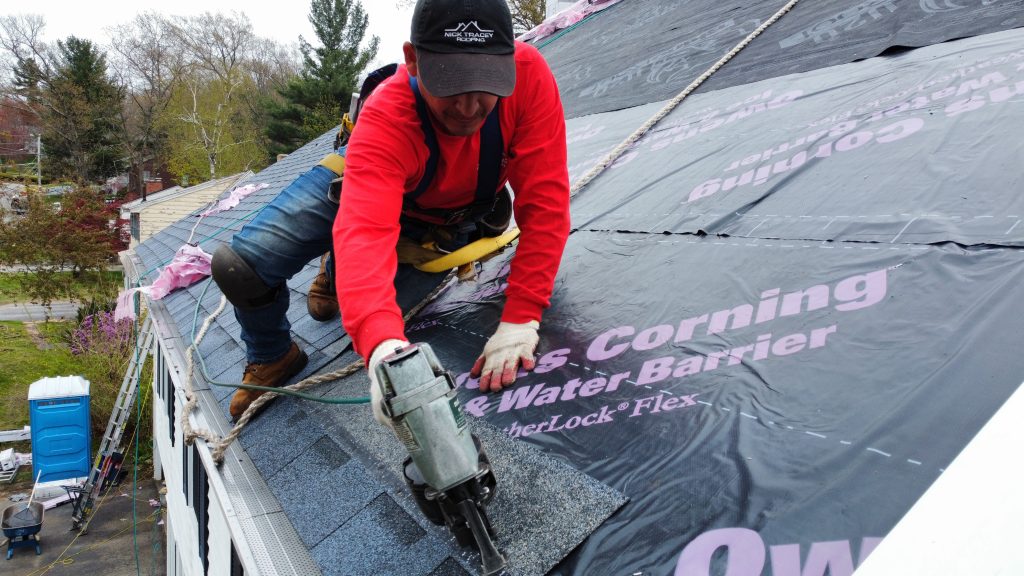
Pro Tip: Always ensure your contractor uses a high-quality Ice and Water Shield membrane under the shingles, especially in valleys and along the eaves.
Metal Roofing
Metal is becoming incredibly popular in the Lakes Region and coastal NH.
The Winter Benefit: Snow slides right off, preventing weight buildup.
The Winter Risk: “Roof Avalanches.” A massive sheet of snow sliding off a metal roof can crush bushes, decks, or even people.
The Solution: You must install snow guards to break up the snow as it slides.
EPDM & Flat Roofing
If you own a business or a home with a flat extension, drainage is your biggest enemy.
The Winter Risk: Standing water that freezes and expands can “pop” the seams of a rubber roof.
Pro Tip: Keep internal drains clear of debris before the first frost.
Part 3: The “Cost of Neglect” vs. The “Cost of Prevention”
We often hear homeowners say, “I’ll just wait until spring to fix that small leak.” In New England, that is a very expensive mistake.
Part 4: Your Winter Readiness Checklist
Follow this timeline to stay ahead of the weather.
October: The External Scan
Check the Flashing: Inspect the metal around chimneys and skylights. This is the #1 spot for leaks.
Trim the Trees: Any branch within 8 feet of the roof should be cut. Ice-laden branches are heavy and abrasive.
Clean the Gutters: Do this after the last leaves have fallen.
November: The Attic Audit
Check for Daylight: Go into your attic during a sunny day. If you see light coming through the roof deck, water will find its way in too.
Look for Mold: Dark spots on the underside of the roof deck mean your ventilation is failing.
Seal the Gaps: Use spray foam to seal “bypass” holes where wires or pipes go from your warm house into the cold attic.
December – March: Active Maintenance
The 6-Inch Rule: If you get more than 6 inches of heavy, wet snow, use a roof rake to clear the first few feet of your roof edges.
Monitor Icicles: Small, clear icicles are normal. Massive, thick “ice curtains” mean you have a heat loss problem that needs professional attention.
Part 5: Frequently Asked Winter Roofing Questions (FAQ)
1. Should I salt my roof to melt ice?
No. Never use rock salt or calcium chloride on your shingles. It is highly corrosive, will rust your gutters, and can chemically damage the asphalt in your shingles. If you have an emergency ice dam, call a professional for Low-Pressure Steaming.
2. How much snow can my roof actually hold?
Most modern NH homes are built to handle 40-50 lbs per square foot. However, “old” snow that has been rained on is much heavier than fresh powder. If you notice doors sticking inside your house or hear creaking sounds, remove the snow immediately.
3. Does homeowners insurance cover ice dam damage?
Usually, yes—the interior damage (ruined drywall/floors) is covered. However, the repair to the roof itself is often considered maintenance and may not be covered. It’s always cheaper to prevent the dam than to file a claim.
Also Check: Winter Roofing Tips: Protect Your Home from Ice Dams and Heavy Snow in New Hampshire
Conclusion: Don’t Face the Winter Alone
Your roof is your home’s first line of defense. In the Seacoast, the Merrimack Valley, and Southern New Hampshire, the weather is unpredictable, but your roof’s performance shouldn’t be.
At Nick Tracey Roofing, we don’t just “bang shingles.” We build roofing systems designed to survive 30+ New England winters. Whether you need a pre-winter inspection, a ventilation upgrade, or a full replacement, we are your local experts.
Contact Nick Tracey Roofing Today for a Free Winter Readiness Inspection Serving Bedford, Merrimack, Portsmouth, Methuen, and beyond.

